2026 Portfolio Photo 281
A Journey into the Hummingbird’s Garden
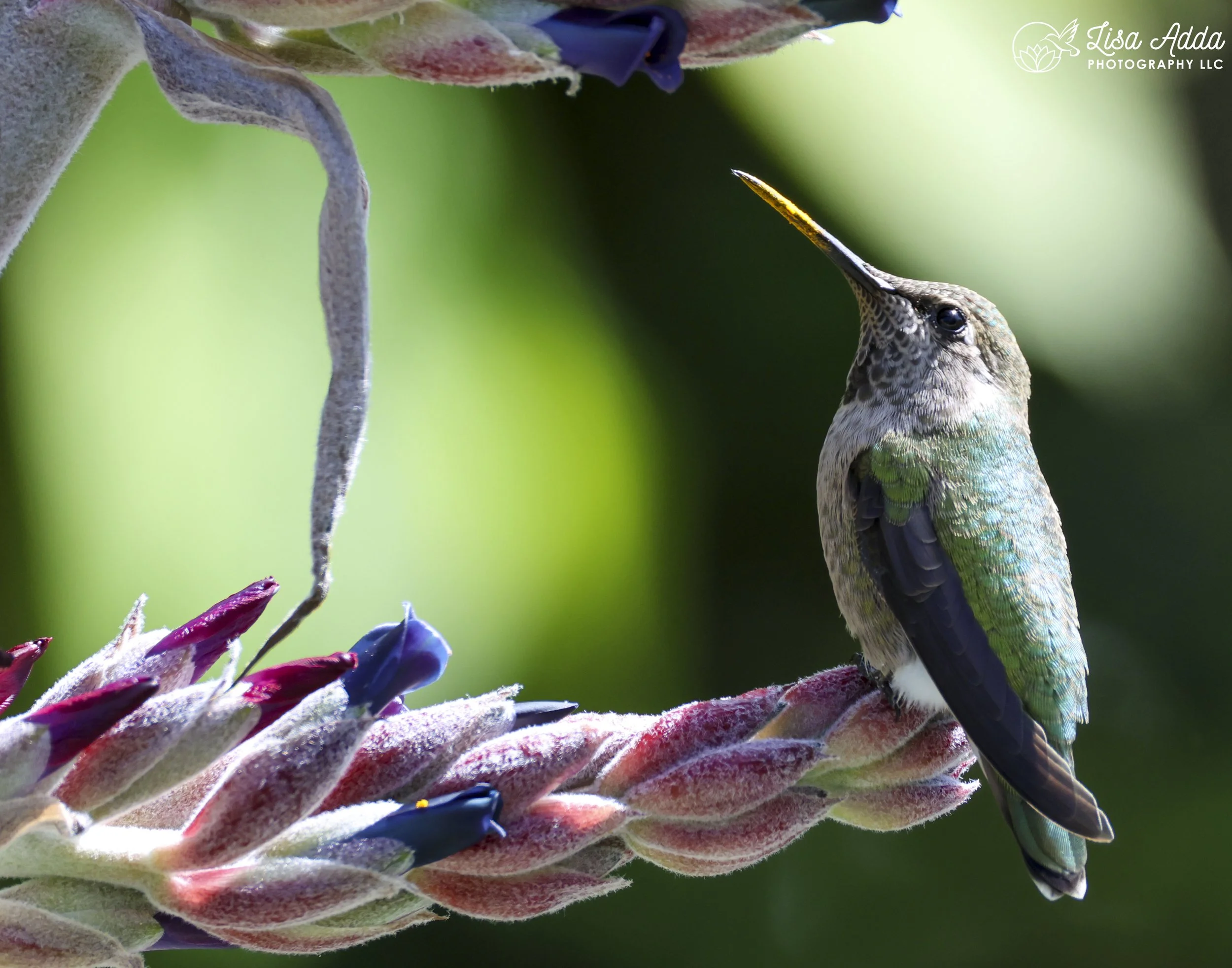
The hummingbird is perched very high at the tip top of the crown of a tree. It’s so tiny that it appears to simply be another leaf on a tree branch. As a nature and bird photographer, I wait, wait and wait some more for the hummingbird to decide on which flower to eat from next. Perched high above the garden the hummingbird scans the nearby flowers. With wings flapping at 50 to 80 times per second, it moves towards the puya venusta flowering plant and begins eating from the deep inside the pink and purple flowers. Within minutes I capture as many photos as possible of the hummingbird eating the sugary nectar from the base of the flowers. After eating, the hummingbird rests for a moment now perched at highest peak of this flowering plant. Perhaps the hummingbird has declared this plant its territory for when another hummingbird tries to swoop in the two begin to quarrel. This fight for the flowers does not last long as one hummingbird chooses not to waste precious energy and finds another flowering plant to eat from.
Here in the UC Botanical Garden of Berkeley there are many gardens and paths to choose from, but on the day of my visit I could photograph a hummingbird at the puya venusta plant for hours if I wanted to. Even as visitors to the botanical garden strolled by following the path or chose to sit down on one of a few nearby benches, the hummingbird continued resting and eating, eating and resting all afternoon from this plant.
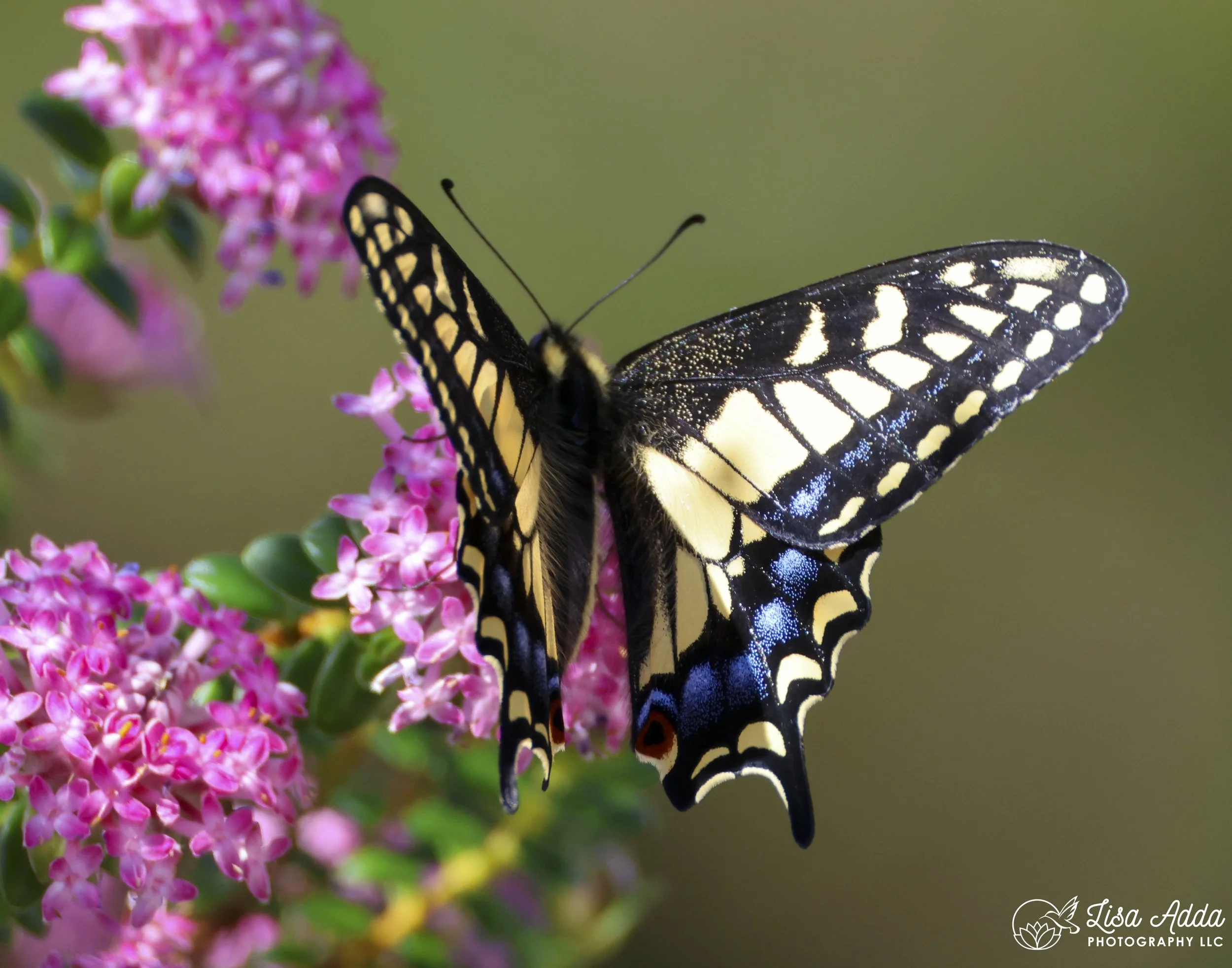
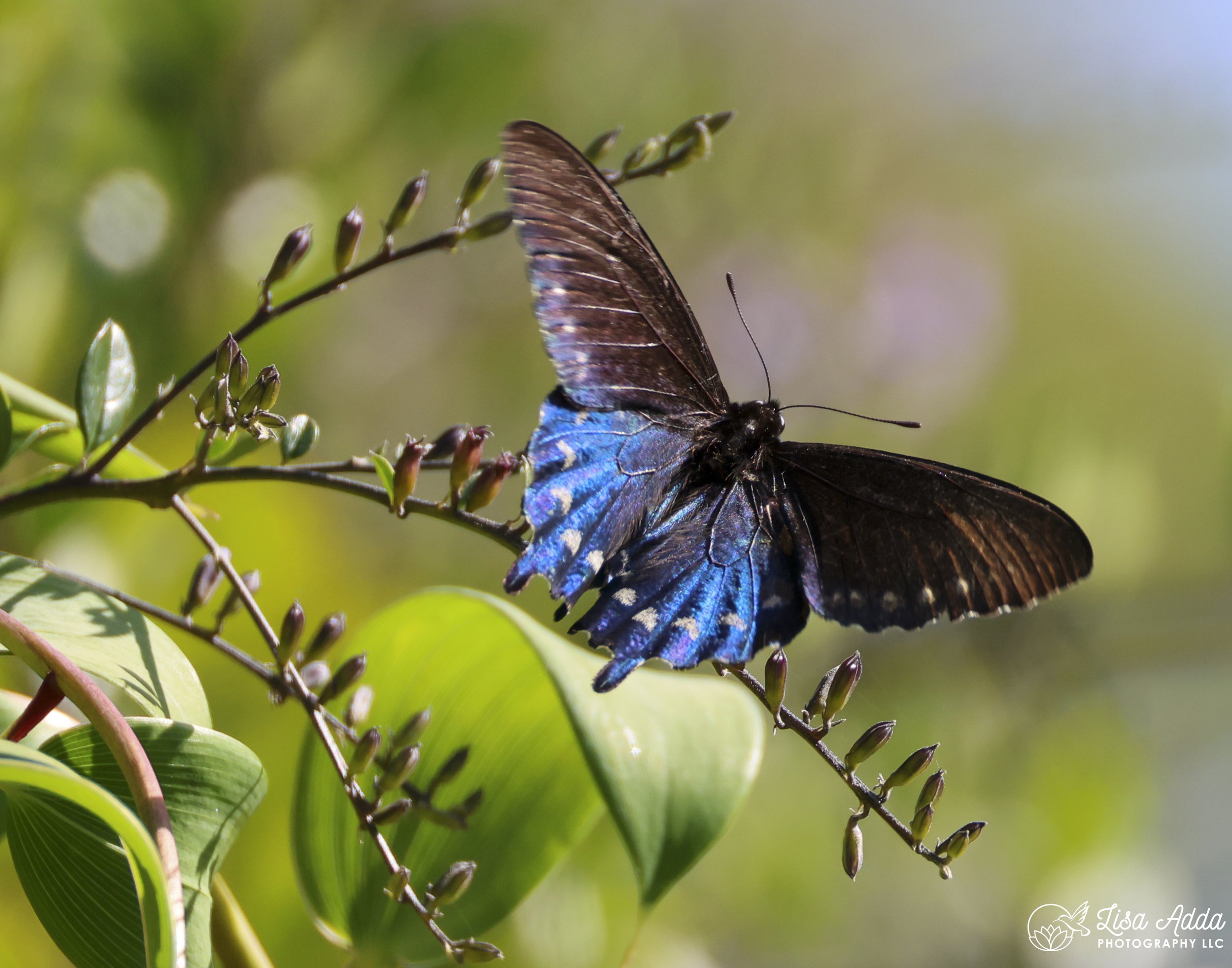
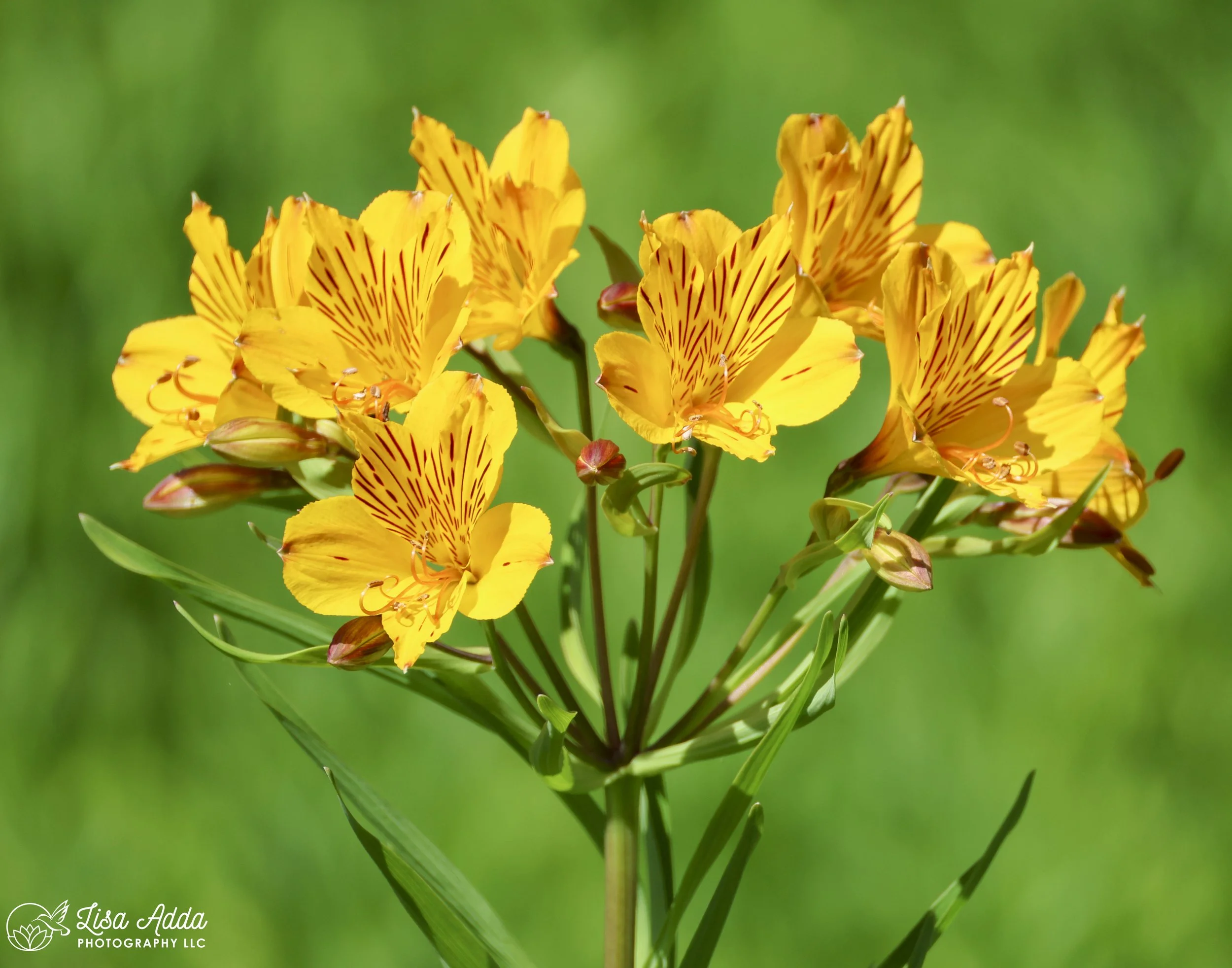
As I walk through the gardens, wearing my sun hat and carrying my camera backpack, I am listening to the bird calls and songs and then scanning the trees to identify which bird is nearby. I photograph a robin nestled among tree branches as it scans the surroundings. I walk further on the path to the Old Rose Garden as I am in the search for butterflies. On one of other garden paths the butterflies fluttered all around me, it’s a moment I simply stop to savor because the butterflies will not land for a single moment to get their picture taken. On this path to the old rose garden there is a pipevine butterfly that captures my attention and lands on the stem of a flowering plant. I manage to capture a few photos before it flies away, and it was the photo I was waiting all afternoon to get. Near the old rose garden, in the bright sunlight of the afternoon there were several blooms of Alstromeria flowers also called Peruvian Lily or Lily of the Incas. I photograph the orange and yellow alstromeria flowers which is another favorite of the hummingbirds in the gardens.
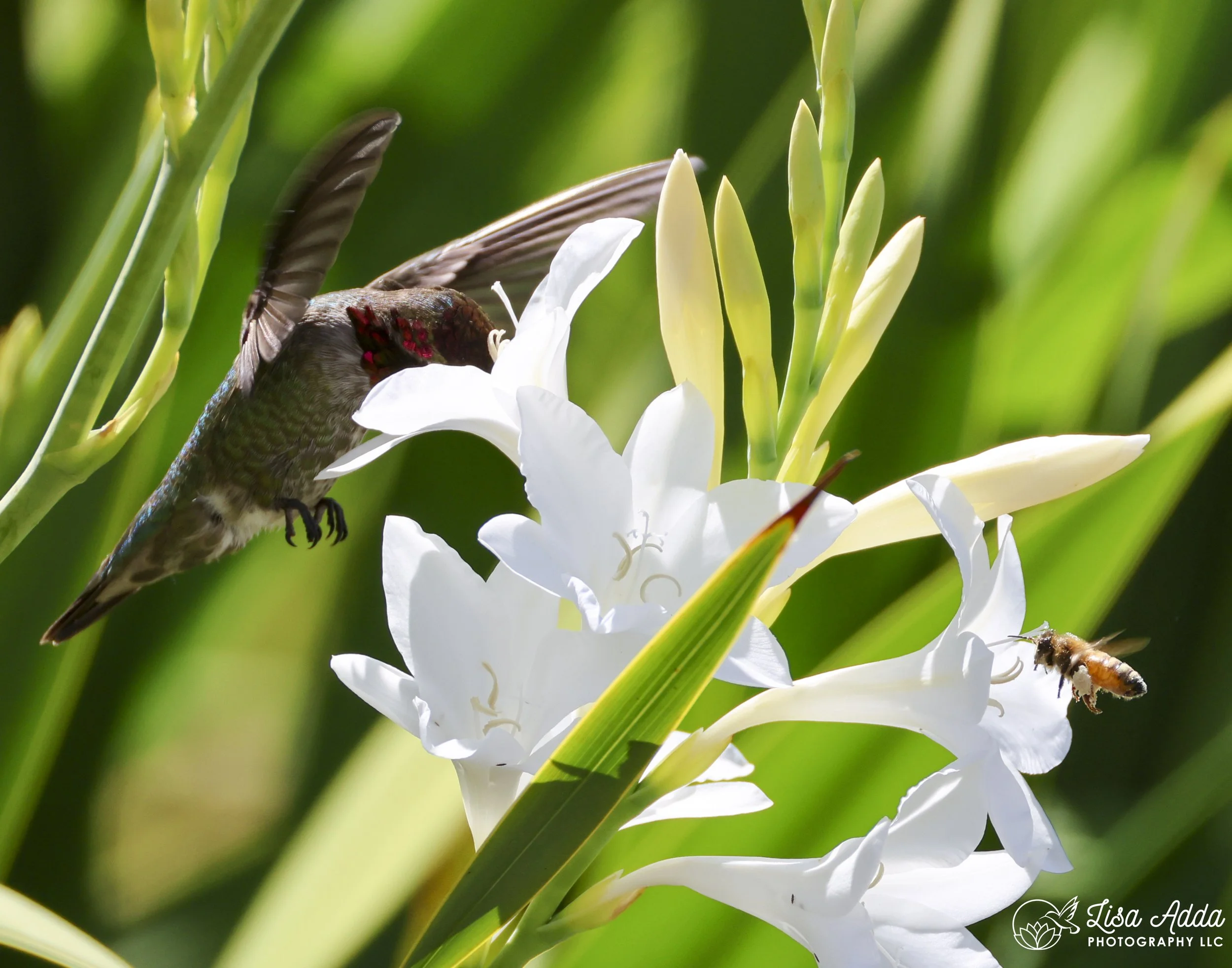
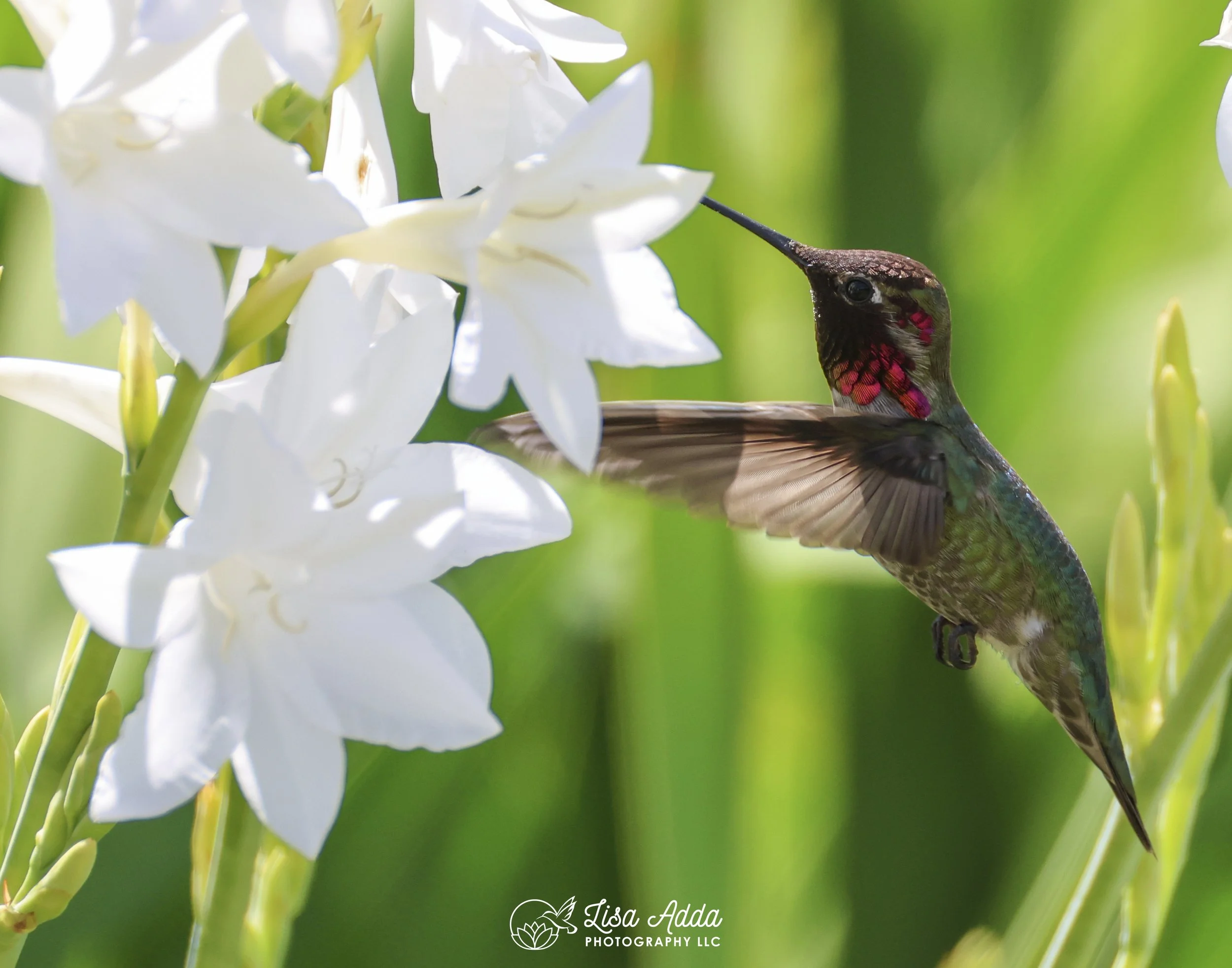
On another day, I am standing in the middle of a garden that is bursting with life and endless beauty to photograph. I am mindful, listening and waiting for the garden to tell me what the photograph. I see a hummingbird perched at the top of the crown of the tree at the very tip of a branch. This hummingbird knows the location of every flower in the garden. I watch and wait. The hummingbird darts over towards a cluster of white Watsonia flowers and begins eating the nectar from these tall spikes of white, tubular flowers. I capture as many photographs as I possibly can. The secret I learned is to focus my camera on the flower and wait for the hummingbird instead of trying to follow the hummingbird with my camera. I pick a flower and the hummingbird drives its beak deep in the nectar for the flower. Within seconds a honeybee, approaches the watsonia flowers on the opposite side of the stalk. It’s one of my favorite images of the hummingbird and the honeybee pollinating the watsonia flower from opposite sides. As the hummingbird finishes eating from one flower it moves to next and the next until it reaches the flower with the honeybee deep inside. There is no fight or fuss the honeybee simply flies to the next cluster of flowers.
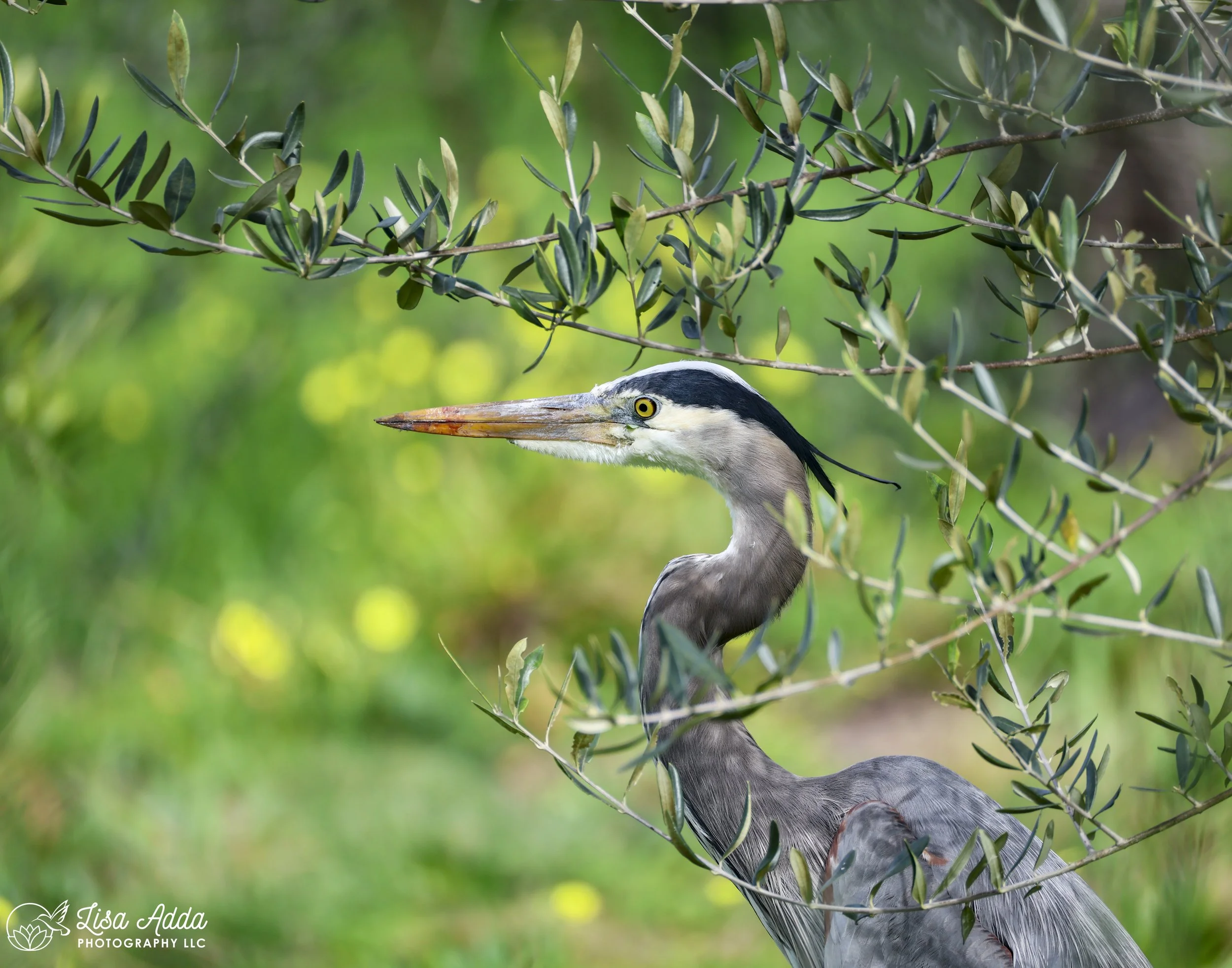
I think about the time I photographed the Great Blue Heron in the garden and as I was taking the photos a little girl walked by asking her mom “what is that?” her mom answered, “it’s a camera used for taking pictures.” The little girl inquired further “pictures of what?” and the mom replied, keeping the answer short and age appropriate said “flowers and people.” As I pondered the answer the mother gave to her daughter, I realized that I am photographing so much more than flowers and birds. I can witness through my camera the entire life cycle of the garden’s ecosystem. I can watch flowers bloom, hummingbirds eating the sweet nectar from hundreds of flowers, and I can look into the souls of the wildlife that I am photographing. Being a nature photographer has made me a much deeper observer of details, life, light, and the subtle changes in the world that we miss.
My audience then finds their own special meaning in the photographs through their own life experiences. The sunflower is a family member’s favorite, the hummingbird is their spirit animal, and the butterfly symbolizes transformation. To me the Great Blue Heron symbolizes patience, self-reliance and adaptability.
Witnessing this moment through the lens of my camera I am eager for more, but I will need to wait again as the hummingbird has returned to its perch at the crown of a nearby tree on the tiniest branch high above the garden. I watch and wait. I stand in one location of the garden and scan my surroundings 360 degrees, one full rotation until I am back facing the hummingbird. In seconds the hummingbird zooms over to a cluster of flowers, but it has disappeared and is out of sight. I must investigate. I walk over to the flowers, but I am unable to photograph the hummingbird as it has moved deep into the thick, green shrubs.
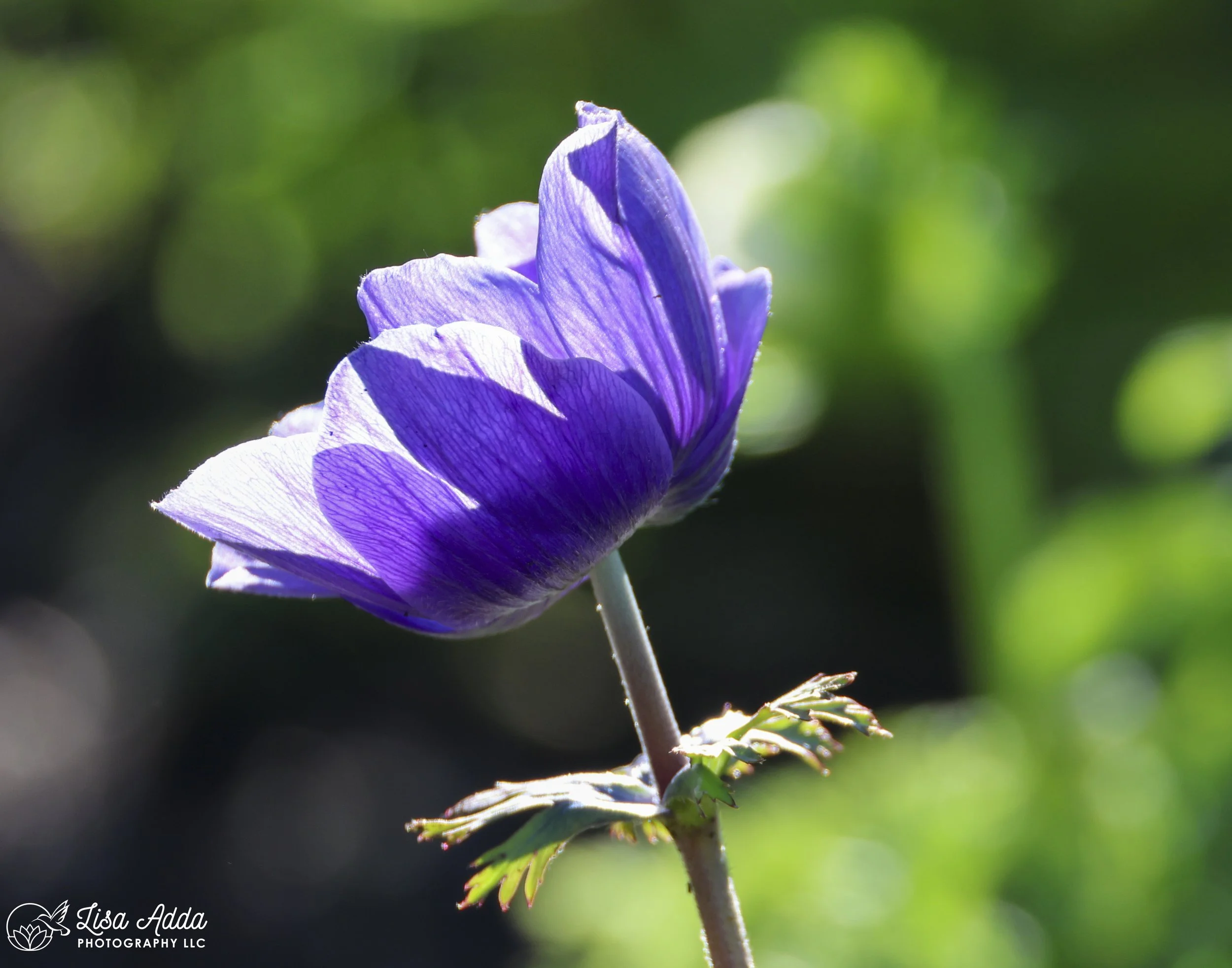
However, the sunlight draws my attention a handful of flowers. I discover these flowers are called purple anemone and the hummingbird leads me to this part of the garden so I could discover them. That is the other secret: when I want to photograph flowers follow the birds and the sunlight in the garden and the opposite is also true: when I want to photograph birds look for the flowers they like to eat from the most. The afternoon sun is beginning to reach golden hour in the garden. The gusts of wind are rustling the leaves of the trees, and it is time for me to leave the garden.
As I reach the end of the garden path, I see that the great blue heron is resting and hunting alone, standing near a row of trees in an area visitors do not walk into. I capture a few portrait images of the great blue heron and try to get the photo of its large wingspan as it flies away but I am out of time and out of luck. The great blue heron has moved behind another tree, out of sight, as it launches into the air soaring higher, and higher until fully out-of-reach by my 800mm lens. It is time for the great blue heron to fly towards nearby water streams and return to its rookery.
It’s my birthday and I am exactly where I want to be photographing in a garden. I have asked one of the garden volunteers, “have you see any hummingbirds today?” She replied, “there is a large shrub in the back of the garden, and they can be seen fluttering in and out of the shrub all afternoon, if you are lucky.” I position myself near the shrub in the back of the garden, camera at the ready, and I scan 360 degrees all around me for any signs of hummingbirds. Finally, I see a hummingbird perched high above on the top cable of a fence that sections off a portion of the garden. It’s waiting perhaps for the right moment to descend into the nearby flowers but there are too many visitors on this lovely Saturday afternoon in the garden. The hummingbird retreats to a nearby tree.
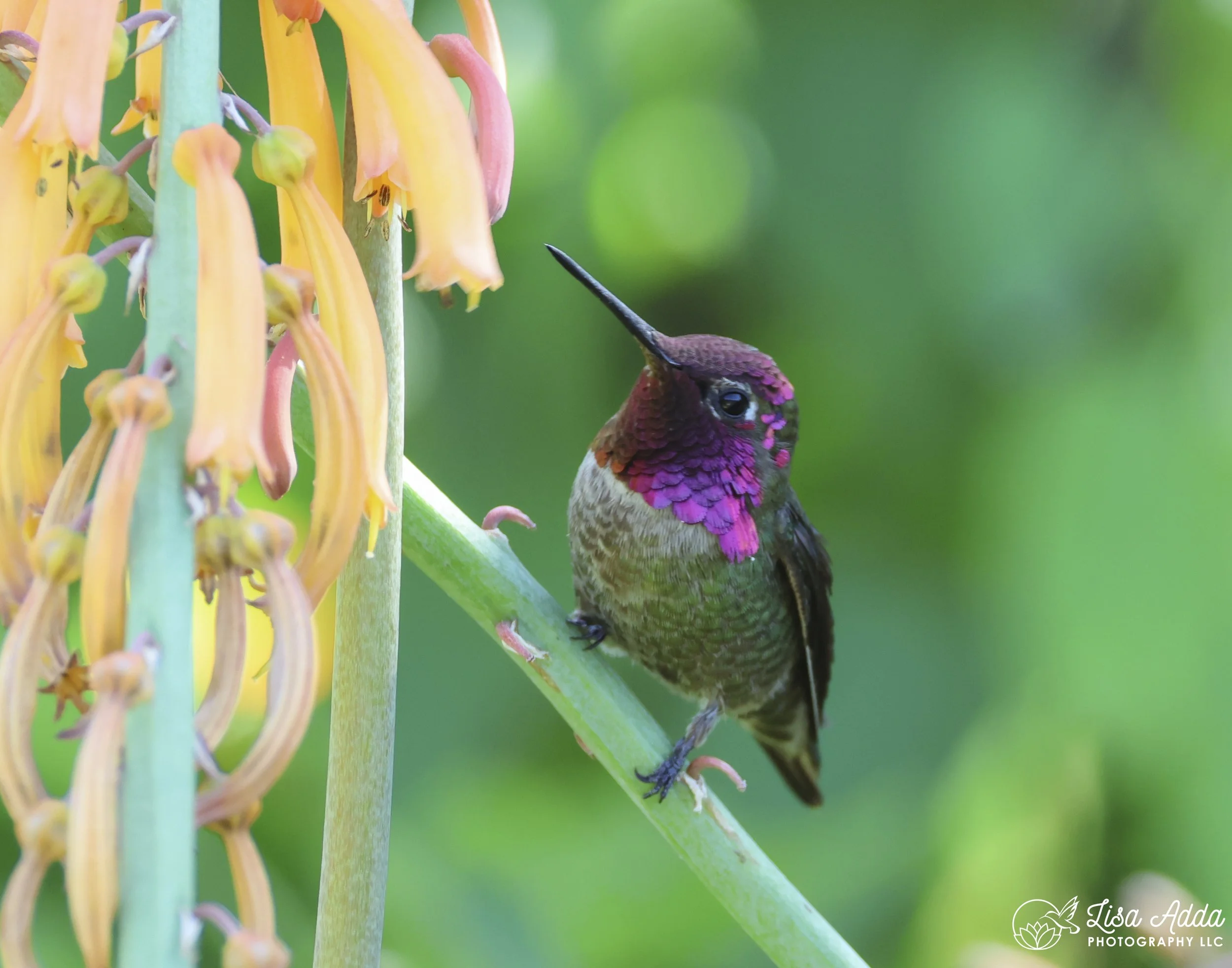
Two finches perch on the same cable at the top of the fence, they are communicating to each other while I take their picture. After they fly off to the nearby trees, the hummingbird returns to the cable at the top of the fence and then darts over to the coral aloe flowers. I aim my camera and try to focus on the nearest cluster of coral aloe flowers that I predict the hummingbird will feed from. This hummingbird perches on the stem on one coral aloe flower to feed from the coral aloe flowers on the other stem. I capture the images of the hummingbird as the sunlight passes through the layers of the hummingbird’s feathers, creating the prism effect. I see the iridescent colors of ruby reds and purples as the hummingbird tilts its head into the sunlight and towards the coral aloe flowers. It’s a magical moment, a happy birthday from the Universe and a momentary end of my journey in the hummingbirds’ Gardens. Until next time.